
12 AI Automation Workflows You Can Build This Weekend (Zapier, Make, n8n)
Concrete AI automations for email triage, lead enrichment, content repurposing, and reporting — with the platform to build each one on and the traps to avoid.

The mistake most people make with AI automation is building the impressive one first. The automations that actually survive are small, boring, and target something you do every single week.
Here are twelve that hold up in production, grouped by the hours they give back.

Choosing a platform first
- Zapier — the widest app catalogue and the easiest to build in. Best default for non-technical users.
- Make — visual, cheaper at volume, better at branching logic and data transformation.
- n8n — open source and self-hostable. The right answer when data can't leave your infrastructure.
Pick one and learn it well. Splitting across three is how you end up maintaining nothing.
Inbox and communication
1. Email triage and labelling. Trigger on new mail → AI classifies into urgent / needs reply / FYI / newsletter → applies a label and drafts a reply for the first bucket. Saves 20–40 minutes a day.
2. Support ticket routing. New ticket → AI extracts intent, urgency, and product area → routes to the right queue with a suggested first response attached.
3. Slack thread digest. Daily at 5pm → pull messages from three busy channels → AI summarises decisions and open questions → post to a summary channel.
Sales and CRM
4. Lead enrichment. New form submission → AI researches the company from its domain → writes a three-bullet brief and a suggested opening line → creates the CRM record.
5. Call follow-up. Meeting recording ready → transcript in → AI drafts the follow-up email and extracts next steps → creates tasks and a draft in your inbox for approval.
6. Deal hygiene. Weekly → AI reads deals with no activity in 14 days → posts a nudge list to the sales channel.

Content
7. Repurposing pipeline. New blog post published → AI generates a newsletter blurb, five social posts, and a LinkedIn version → drops them into a review table in Airtable or Notion.
8. Podcast or video show notes. New episode uploaded → transcript → AI writes chapters, description, quotes, and a blog draft → creates the publishing checklist.
9. Competitor monitoring. Daily → fetch competitor blog and changelog feeds → AI flags anything materially new → weekly digest email.
Operations and reporting
10. Receipt and expense capture. Email with attachment lands in a labelled folder → AI extracts vendor, amount, date, category → appends a row to the finance sheet.
11. Weekly metrics narrative. Monday morning → pull numbers from analytics and the database → AI writes a short narrative explaining what changed and what to look at → post to the team channel.
12. Meeting-free status updates. Friday → collect completed tasks per person from your project tool → AI writes a team update grouped by project → email it, cancel the meeting.

The design rules that keep automations alive
Keep the AI step narrow. "Classify this into one of five categories" is reliable. "Handle this customer" is not. Use AI for judgement, deterministic steps for action.
Force structured output. Ask for JSON with a fixed schema, and validate it. Free-text output breaks the next step eventually.
Build a human approval gate for anything outbound. Drafts, not sends. Especially for email, invoices, and anything customer-visible. You can remove the gate later, once you trust it.
Handle errors loudly. Every automation needs an error path that notifies a human. Silent failures are worse than no automation, because you stop checking.
Log everything. Store inputs and outputs somewhere queryable. When something goes wrong in six weeks, you'll need the trail.
Cap the cost. Set spend limits on both the automation platform and the AI provider. Loops happen.
Where automation is the wrong answer
- Tasks you do less than monthly — the maintenance exceeds the saving.
- Processes still changing weekly — automate after they stabilise.
- Anything where a mistake is expensive and hard to reverse.
- Judgement calls with real consequences, dressed up as classification.
Start here
Track your week. Find the task you did four times that you resented. Automate exactly that, with a human approval step. Live with it for two weeks before building the next one.
Twelve automations built that way over a year will change your working life. Twelve built in one weekend will all be broken by March.
More in the AI productivity stack and our Anthropic Cowork breakdown.
Keep reading
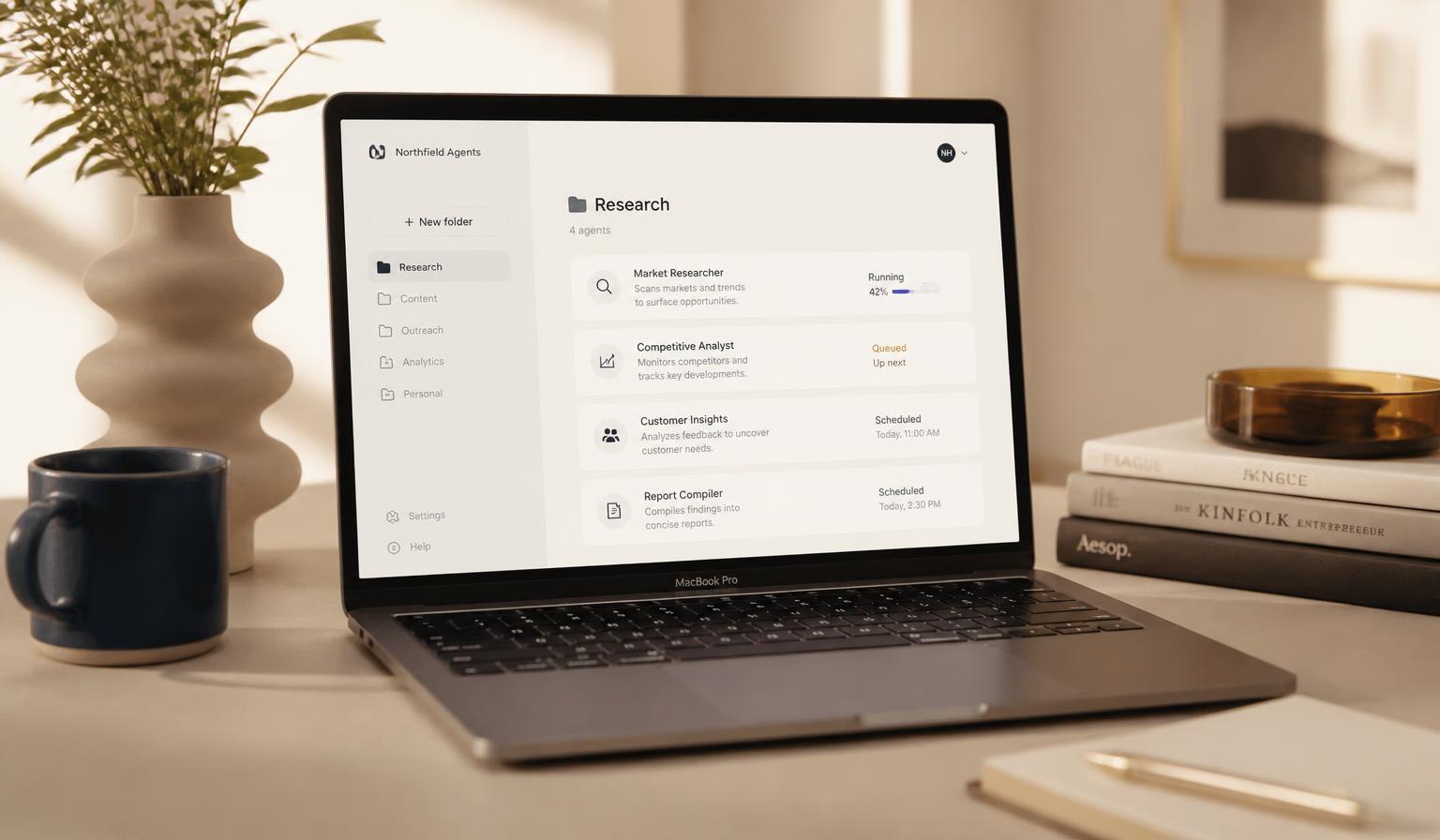
Anthropic's Cowork Just Moved Agentic AI Out of the Terminal — Here's What It Actually Does
Anthropic launched Cowork, a folder-based agent inside the Claude desktop app that edits your real files. We break down how it works, what it costs, the safety warnings, and how it compares to rival AI agents.
AI Inbox Management: A System That Actually Gets You to Zero
How to use AI triage, drafting, and scheduling to cut email time in half — with the rules, prompts, and privacy checks that keep automation from causing damage.
Building an AI Second Brain: Notes, Research, and Retrieval That Actually Works
NotebookLM, Notion AI, Obsidian and Mem compared — plus a practical system for capturing, organising, and querying your own knowledge with AI instead of hoarding it.