AI Tools for Logo and Brand Design: What Works, What Fails, What to Avoid
Where AI genuinely helps with branding — moodboards, iterations, mockups, brand systems — and where it produces logos you'll regret. With a practical workflow and tool picks.
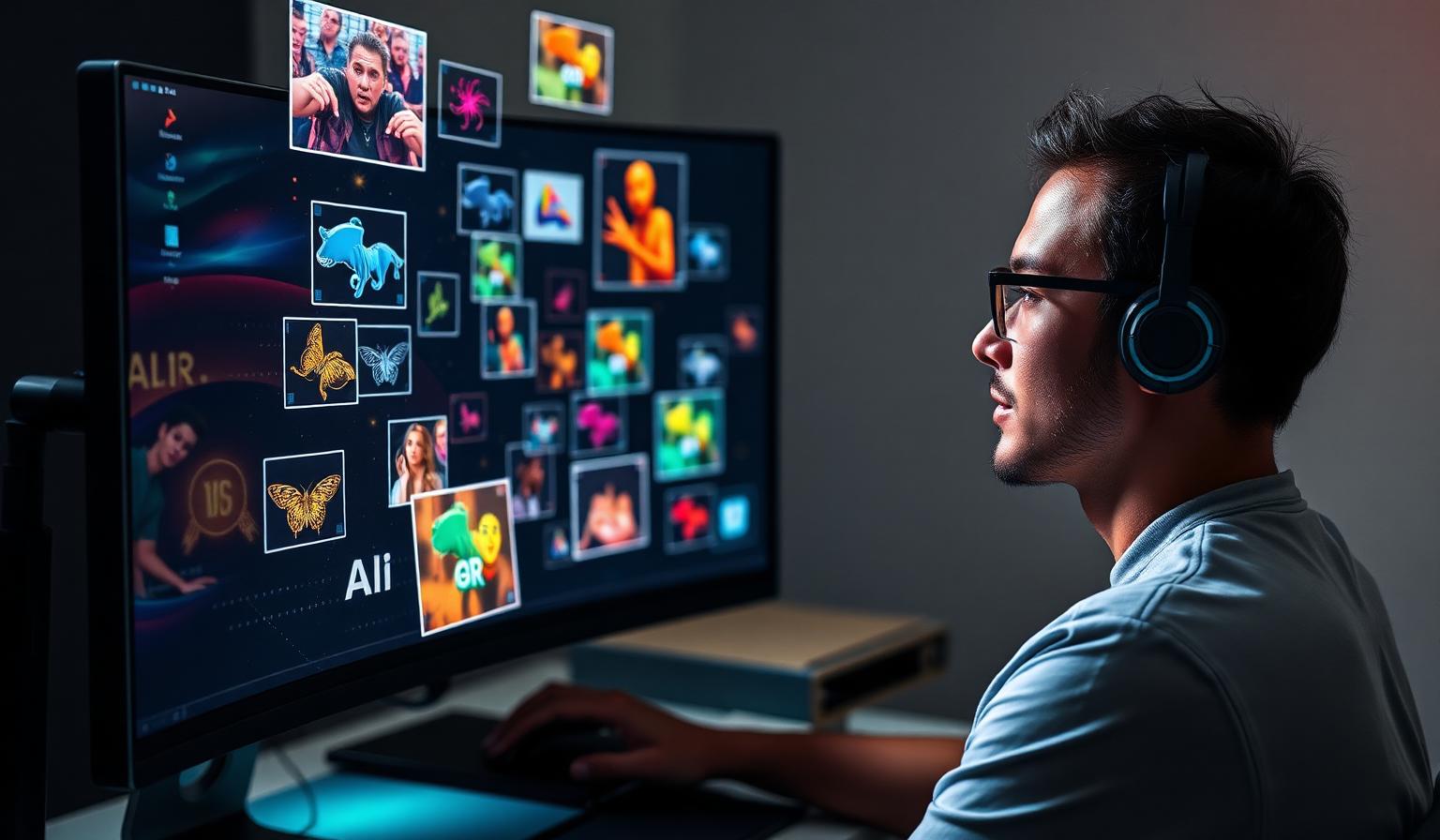
AI logo generators promise a finished identity in sixty seconds. They deliver a raster image that looks fine at 512 pixels and falls apart the moment you need it embroidered, embossed, favicon-sized, or one-colour on an invoice.
That doesn't mean AI is useless in branding. It means you have to know which parts of the job it's good at.
What AI is genuinely good at
Exploration. Generating forty visual directions in an hour is real value. Most of them will be bad; two will suggest something you wouldn't have drawn.
Moodboards and territory-setting. Instead of scavenging Pinterest, generate the mood you're describing to a client. It makes an abstract conversation concrete fast.
Mockups and applications. Once a mark exists, AI mockups — signage, packaging, apparel, storefronts — are quick, convincing, and cheap.
Variation within a system. Illustration sets, icon families, social templates, and pattern libraries that need to feel related.
Copy and naming support. Tagline options, tone-of-voice documents, and naming shortlists are a language-model strength.
What AI is bad at
Vector marks. Most generators output pixels. A logo must be vector, scalable, and legible at 16 pixels. Tools that "export SVG" usually auto-trace, producing bloated paths a designer has to rebuild anyway.
Distinctiveness. Generators regress to the mean of their training data. That's precisely the opposite of what a logo needs.
Trademark safety. A model will happily produce something close to an existing registered mark. It has no knowledge of registries. This is the single biggest practical risk.
Rationale. Clients don't buy shapes, they buy reasoning. "It came out of a prompt" isn't a rationale.
A workflow that produces something usable
- Write the brief first, in words. Audience, positioning, three adjectives, three things the brand is not. Do this before touching a generator.
- Generate territories, not logos. Ask for visual worlds — colour, texture, energy — and pick two.
- Sketch the mark by hand or in vector. This is the part you don't outsource. Simplicity is a decision, not an output.
- Use AI to stress-test. Generate applications: on a bag, a sign, a dark website, a small avatar.
- Build the system. Type scale, colour tokens, spacing rules, logo clear-space, do's and don'ts.
- Search the trademark registries before anything is announced, and get legal review if the brand matters.
Tool picks by job
| Job | Tool |
|---|---|
| Territory exploration | Midjourney, Firefly |
| Text-in-image concepts | Ideogram |
| Vector finishing | Illustrator, Figma |
| Templates and rollout for small teams | Canva |
| Licensing-safe enterprise work | Firefly |
| Brand voice and copy | Claude, ChatGPT |
The small-business shortcut
If you're a solo founder without a design budget, here's the honest advice: don't chase a clever symbol. Choose a distinctive typeface, set your name in it carefully, pick a colour nobody in your category uses, and be consistent for two years. A well-set wordmark beats a generated icon almost every time — and it costs nothing but restraint.
Use AI for everything around that mark: social templates, illustration, photography, mockups, and the guidelines document.
Rights and disclosure
Check your generator's commercial terms — they differ by plan. Firefly offers the strongest indemnification story for enterprises. Keep records of what was generated where, and be prepared to disclose AI involvement if a client contract requires it.
The bottom line
AI compresses the exploration phase of branding from weeks to hours. It does not compress the judgement phase, and the judgement phase is what you're actually paying a designer for.
More in AI Image & Design Tools, or read our image generator buyer's guide.
Keep reading
AI Photo Editing in 2026: Generative Fill, Upscaling and the Retouching Stack
Which AI photo editing tools are worth paying for — generative fill, background removal, upscaling, and batch retouching — tested on real product and portrait work.
Midjourney Prompt Structure: The Formula Professionals Actually Use
A practical Midjourney prompting framework — subject, environment, lighting, lens, style, parameters — plus reference workflows for consistent characters and brand visuals.
The Best AI Image Generators in 2026: A Buyer's Guide for Real Work
Midjourney, DALL·E, Stable Diffusion, Firefly, Ideogram and Flux compared on quality, text rendering, licensing, and price — with clear picks for each use case.